Latest writing

A compact archive for field notes, gallery posts, and urbanism writing.

Rhododendron and Mt. Hood

Rhododendron and Mt. Hood

I finally went skiing on Mt. Hood after living in Oregon for over a decade! In the worst year for snow in a generation! I switched from snowboarding to skiing to same if I'd enjoy it more and I'm glad I did. It was much easier on my body. We rented a place near Rhododendron, a nice little cabin with a fireplace and hot tub. Staying with friends and their kids was an experience I'm not sure we were ready for, but overall it was a good experience. I'm hoping I can make it back at least one more t

Read more
Turn, Turn, Turn

Turn, Turn, Turn

It was a busy week full of social events and soccer. My coworker had a BBQ yesterday and I hosted a neighborhood potluck at the park today. I was too busy to take many photos, but it was a good turnout. I’m really trying to organize and build community. It’s the hole in my life I’m trying to change. In the same way, this morning I also went to my second ever Catholic mass. I went alone to the 8 am. I’ve been trying a few churches out to see how I feel about them, community-wise. While I’m agno

Read more
The Future of Portland Transit Hangs in the Balance

The Future of Portland Transit Hangs in the Balance

The Oregonian podcast Beat Check recently shared an episode titled "A Perilous Moment for Portland Mass Transit" in which it highlighted the growing crisis facing TriMet, Portland's regional transit agency, as it grapples with declining ridership, financial strain, and public perception challenges. While crime on the system has dropped since the pandemic, fare evasion has nearly doubling from 15 percent in 2016 to close to 30 percent in 2024. The agency is pushing for an increase in the payroll

Read more
Portland Auditor Releases Progress Report for Residential Infill Project

Portland Auditor Releases Progress Report for Residential Infill Project

In 2017, after about a decade in the affordable housing and community development industry, my career took a turn and I landed in a position as a long range planner in the Portland region. One of the very first projects I worked on was codifying and adopting changes related to Oregon Senate Bill 1051 of 2017. SB 1051 required communities with more than 10,000 people to remove certain barriers to housing production, including giving regulated affordable housing projects priority in the land use

Read more
The Myth of the Walkable Corner Store

The Myth of the Walkable Corner Store

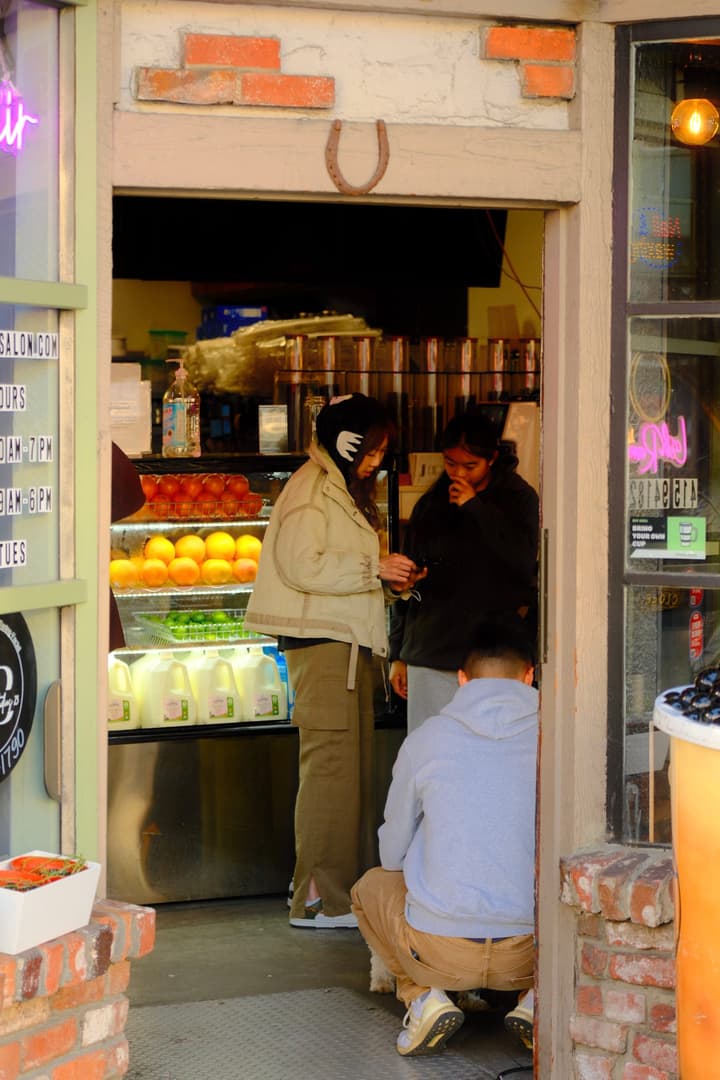
For decades, planners have envisioned small, pedestrian-friendly commercial hubs within residential neighborhoods. A local café, a small grocery store, or a retail shop embedded in a walkable area where people can meet their neighbors and run errands without driving. This concept is central to the growing 15-minute city movement, which aims to create neighborhoods where residents can access daily essentials—jobs, schools, parks, groceries—within a short walk or bike ride. As a leader in progres

Read more
Unraveling Urbanism: Housing, Advocacy, and the Battle for Better Cities

Unraveling Urbanism: Housing, Advocacy, and the Battle for Better Cities

Land use planning has always faced scrutiny, but in recent years, the conversation has grown louder and more polarized. Social media and digital activism have brought more voices into the debate, leading to important discussions but also fueling misunderstandings about what planners do and the forces that shape our cities. Like many in my field, I became a planner to help create better places. In fact, very few of us enter the planning profession to defend outdated zoning, reinforce sprawl, or

Read more
Death and Life: Rereading Jane Jacobs and the Legacy of Good Intentions

Death and Life: Rereading Jane Jacobs and the Legacy of Good Intentions

I recently finished rereading Jane Jacobs’ The Death and Life of Great American Cities. It wasn’t my first encounter with the book. I first read it in graduate school over 15 years ago. At the time, it was eye-opening. I wasn’t particularly familiar with the planning profession then, beyond a vague desire to make places better—a motivation that probably leads many people into the field. Having grown up in Saginaw, Michigan, I witnessed firsthand the fallout of deindustrialization. The once-thri

Read more
Despite Our Best Intentions with Street Frontages

Despite Our Best Intentions with Street Frontages

Automobiles are undeniably a significant part of American life. Consequently, accommodating them with roadways and parking lots has come to dominate much of the American built environment, often prioritizing convenience over aesthetics. In an effort to promote desirable outcomes like walkability and the revival of traditional commercial corridors, planners have tried to legislate specific design requirements. They can mandate that developers place parking lots behind buildings, construct structu

Read more
The Coming War on Impact Fees

The Coming War on Impact Fees

The Supreme Court ruled Friday that developers and home builders in California may challenge the fees commonly imposed by cities and counties to pay for new roads, schools, sewers and other public improvements. The justices said these “impact fees” may be unconstitutional if builders and developers are forced to pay an unfair share of the cost of public projects. Los Angeles Times In a landmark decision on Friday, the Supreme Court of the United States ruled that developers and home builders in

Read more
Overpromised and Underdelivered: the False Pretenses of Missing Middle Housing Developers

Overpromised and Underdelivered: the False Pretenses of Missing Middle Housing Developers

ADUs, or Accessory Dwelling Units, are usually small housing units people build in their basements, backyards, or above their garages to accommodate family or to rent out for supplemental income. So-called “missing middle" housing (from here on referred to Middle Housing) are all those housing types that are Goldilocks-sized, fitting in somewhere between single-family residences and larger multifamily buildings. These include cottage clusters, quadplexes, and other attached housing that have a h

Read more
What Planners Know vs. What Planners Do

What Planners Know vs. What Planners Do

Why talk about what urban planners know instead of what they actually do? Because more often than not, those two things do not align. To understand that gap, it helps to look first at the system planners work within. Most planners in the United States work within one of the country’s 89,000 local governments, each with its own set of rules, politics, and funding constraints. It is a slow-moving system shaped by history, bureaucracy, and competing interests. It is frustrating and messy, sometime

Read more